

Quick Answer
The cost of dental bonding in Canada usually ranges from $99 to $484 per tooth. This price typically includes the application of a tooth-coloured composite resin, shaping, polishing, and making adjustments to achieve a natural look. Total costs may differ based on province, number of teeth, complexity, insurance, and the dentist’s expertise.
What To Expect in This Guide
In this guide, we will explore the cost of dental bonding in Canada, detailing factors affecting pricing and the process involved. You’ll learn about the types of dental bonding, their benefits, and their challenges. We will also address frequently asked questions to empower you to make informed decisions about your oral health.
- What Is Dental Bonding?
- Types of Dental Bonding
- The Cost of Dental Bonding in Canada
- Factors Affecting Teeth Bonding Costs
- How the Dental Bonding Process Works
- Dental Bonding Benefits
- Tooth Bonding Challenges
- Tooth Bonding Maintenance
- Frequently Asked Questions (FAQ)
What Is Dental Bonding?
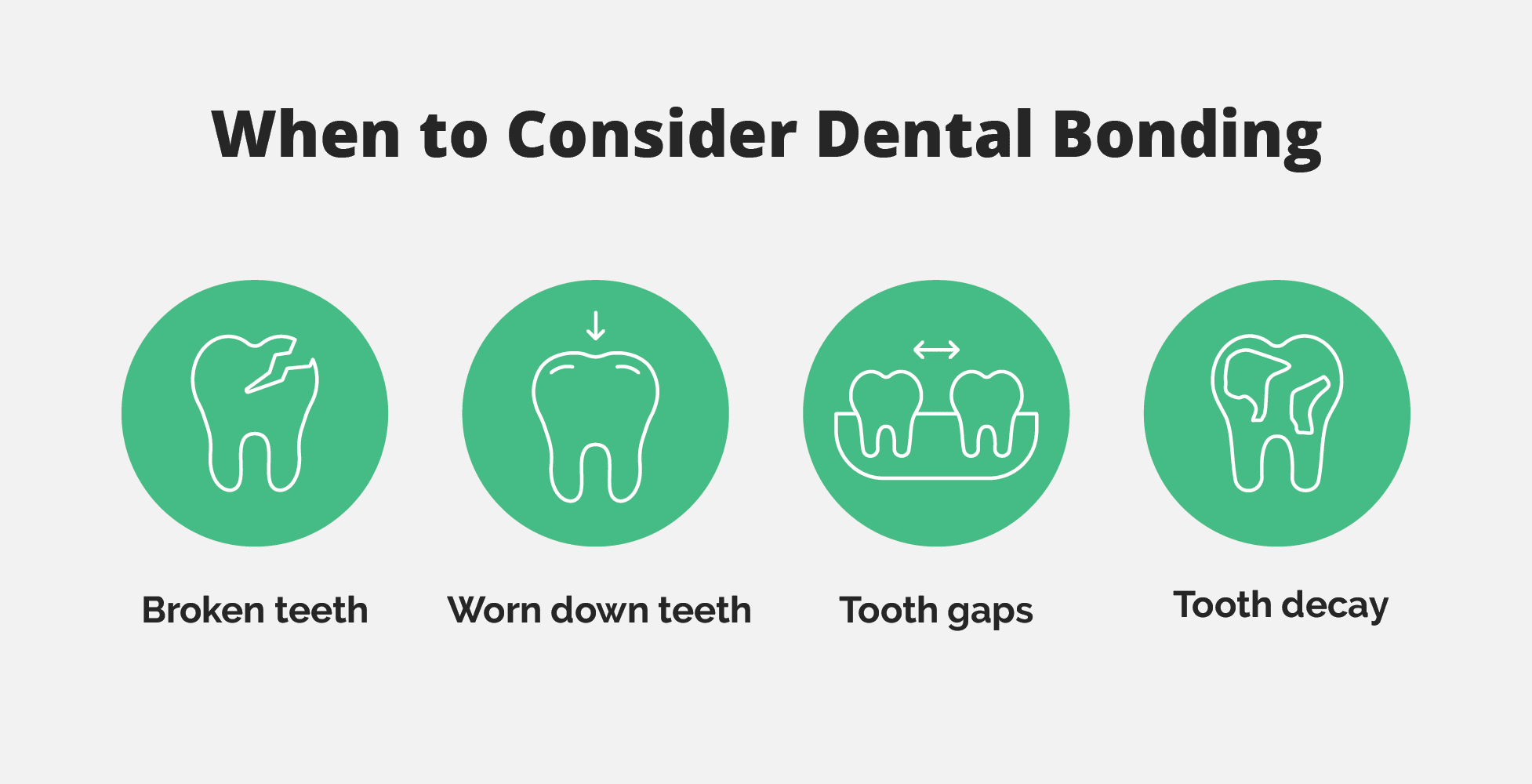
Dental bonding is a cosmetic procedure that involves applying a tooth-coloured composite resin material to teeth, and it can repair chips, gaps, or discolorations. This minimally invasive treatment offers a quick solution to enhance your smile with a natural-looking finish.
What Is Composite Resin?
Composite resin is a tooth-coloured material made from a mix of plastic and glass fibres. This combination allows it to be easily matched to your natural tooth colour. Its versatility and simple application make it a great choice for dental procedures like tooth bonding.
Types of Dental Bonding
There are two primary types of dental bonding. Each type serves different needs based on the complexity of the issue.
- Direct bonding: In direct bonding, dentists apply tooth-coloured composite resin directly to the affected tooth during a single visit. They then shape, mould, and harden it using a special light. This method is ideal for minor repairs, such as chips, gaps, or discolourations.
- Indirect bonding: Indirect bonding involves creating a custom restoration outside of the dental office. During the first appointment, the dentist takes impressions of your tooth, and the restoration is crafted in a lab. During the second appointment, the dentist bonds the pre-made restoration to your tooth using composite resin. This approach is common for more extensive restorations.
The Cost of Dental Bonding in Canada
The cost of dental bonding in Canada typically ranges from $99 to $484 per tooth, depending on various factors. This price often includes the initial exam, tooth preparation, resin application, and finishing touches like trimming and polishing. Additional services like X-rays or follow-up visits may increase the overall price.
Here is a breakdown of the costs of dental bonding based on province.
Average Cost of Dental Bonding in Canada by Province
| Province | Cost per tooth |
| Alberta | $143- $364 |
| British Columbia | $157 - $484 |
| Manitoba | $141 - $397 |
| New Brunswick | $138 - $406 |
| Newfoundland and Labrador | $140 - $373 |
| Nova Scotia | $156 - $442 |
| Ontario | $180 - $418 |
| Prince Edward Island | $139 - $449 |
| Quebec | $99 - $426 |
| Saskatchewan | $162 - $462 |
*Note: The costs above reflect average price ranges and may vary based on specific clinics and patient needs. Data not available for the Northwest Territories, Nunavut, and Yukon.
Factors Affecting Dental Bonding Costs
Several factors can influence the cost of dental bonding. Understanding these factors can help you estimate your potential expenses and budget effectively.
Location
The first factor affecting the cost of dental bonding is location. Prices vary by province and city. Additionally, urban areas with a higher cost of living may charge more than rural locations.
Number of Teeth
The total number of teeth requiring bonding is another factor influencing costs. More teeth mean more materials and time needed, increasing your overall dental bill.
Complexity
Another cost variable is the complexity of the procedure. Minor repairs, like a simple chip, may cost less than extensive bonding with multiple layers of resin and detailed shaping.
Expertise
Your dentist's qualifications can also impact the cost of dental bonding in Canada. A prosthodontist is a specialist who focuses on making dental prosthetics and may charge higher fees than a general practitioner.
Insurance
Insurance coverage is the last factor that can affect the overall cost of dental bonding. While most plans don’t cover cosmetic procedures, they may cover bonding to repair damaged teeth. Always check with your provider to understand any out-of-pocket costs.
How the Dental Bonding Process Works
The dental bonding process is straightforward and usually completed in a single visit. Here's what to expect:
1. Preparation
Your dentist will choose a resin colour that matches your other teeth. They'll then clean and slightly roughen the tooth to help the resin stick to it.
2. Application
Next, the dentist will put the resin on the tooth and shape it to cover chips, cracks, or gaps. They'll make sure it looks natural and even.
3. Curing
After applying the resin, the dentist will use a special light to harden it and secure it in place.
4. Adjustment
After the resin is hard, the dentist will check your bite to make sure it feels right and make any needed adjustments. They'll also polish the bonded area to give it a smooth finish.
5. Aftercare
After the procedure, avoid eating hard or sticky foods to let the bonding set properly. Remember to brush and floss regularly to keep your teeth and bonding in great shape.
Dental Bonding Benefits
Dental bonding offers several advantages for those looking to improve their smiles. Here are some of the key benefits to consider.
- Cost: Dental bonding is often more affordable than other options, like porcelain veneers or crowns, making it a great choice for many people.
- Time: The procedure usually only takes one visit, providing quick results without needing multiple appointments.
- Pain: Dental bonding is minimally invasive and usually doesn’t need anesthesia. It offers a more comfortable experience with shorter recovery times.
- Aesthetics: The composite resin can match the colour of your natural teeth, giving you a more natural look.
- Versatility: Dental bonding can fix various issues, from repairing chips to closing gaps, making it a versatile solution for different needs.
Dental Bonding Challenges
While dental bonding has several advantages, it also comes with certain challenges. Here is a quick overview of those challenges.
- Damage treatment: While it is possible to fix damaged bonding, the process can be more complicated than repairing other types of dental work.
- Aftercare: To keep your bonding in good shape, you’ll need to avoid habits like biting your nails.
- Discoloration: The composite resin can get stained over time, especially if you drink a lot of coffee or red wine.
- Durability: Bonding may not last as long as other options like veneers or crowns. It typically needs to be replaced every few years.
Dental Bonding Maintenance
It’s important to make some lifestyle adjustments to extend the lifespan of dental bonding. Here are some steps you can follow:
- Adjust habits: Avoid hard candies, ice, and nail-biting to protect your bonded teeth.
- Schedule regular check-ups: Visit your dentist regularly to catch any problems early and keep your bonding in excellent shape.
- Upkeep dental bonding: Brush and floss daily to prevent stains and clean your bonded teeth.
By understanding the cost of dental bonding in Canada and the maintenance required, you can budget effectively and enhance your oral health.
Frequently Asked Questions (FAQ)
How Long Does Dental Bonding Last?
Dental bonding typically lasts between three and ten years. However, its longevity depends on factors such as:
- Eating habits
- Oral hygiene practices
- Location of the bonded teeth
Teeth bonding can maintain appearance and functionality for longer with proper care and regular check-ups.
Is Composite Bonding Covered by Insurance in Canada?
Coverage for composite bonding can vary by insurance provider and plan in Canada. Many insurance policies may offer partial coverage when bonding is used for restorative purposes, such as repairing a damaged tooth.
However, coverage for purely cosmetic bonding may be limited. It’s best to check your specific policy for details.
Is Composite Bonding Covered by the Canadian Dental Care Plan (CDCP)?
The CDCP does not cover cosmetic dental procedures, but may cover bonding for mobile teeth (teeth that feel loose or move slightly because of weakened support from the gums or surrounding bone), provided it meets certain conditions. Pre-authorization is typically required for coverage. Check the CDCP guidelines for a complete breakdown of the coverage types and limitations.
If you’re concerned about the cost of dental bonding without insurance, inquire with your provider about potential out-of-pocket costs.
Is Bonding Better Than Veneers?
Bonding is generally more cost-effective and less invasive, making it suitable for minor corrections compared to veneers. Veneers, however, can be more durable and provide a more dramatic transformation. Your choice should depend on your specific needs and budget.
Does Tooth Bonding Hurt?
Most people find dental bonding painless, and anesthesia is not usually used. Some might feel mild sensitivity afterward, but it goes away quickly.
Is Tooth Bonding Safe?
Yes, tooth bonding is completely safe when performed by a qualified and experienced dentist. The materials used are biocompatible. Plus, the process involves minimal alteration of your natural tooth structure, ensuring your healthy teeth remain intact.


